Tuesday, December 11, 2018

Crow Pose: Mastering the Art of Balance and Strength


Crow pose, also known as Bakasana, is a popular yoga posture that requires strength, balance, and focus. It is a challenging pose that may take some time to master, but with practice and patience, anyone can learn to hold the pose and reap its benefits.

The crow pose is an arm balance that engages the core, arms, and upper body muscles, providing a full-body workout. It also helps to improve concentration, balance, and confidence.

To begin, start in a squatting position with your feet slightly apart. Place your hands on the floor in front of you and spread your fingers wide. Then, lift your hips up and shift your weight forward until your knees are resting on the backs of your upper arms. Slowly lift your feet off the ground and engage your core to hold the pose.

Remember to keep your gaze forward and your shoulders away from your ears. Breathe deeply and focus on maintaining balance and stability in the pose.

If you are just starting out with the crow pose, it may be helpful to use a block or blanket under your forehead to provide support and prevent face-planting. You can also practice variations of the pose, such as the one-legged crow pose or the side crow pose.

As with any yoga posture, it is important to listen to your body and avoid pushing yourself beyond your limits. Take breaks as needed and only hold the pose for as long as you feel comfortable.

Incorporating the crow pose into your regular yoga practice can help you build strength and confidence, both on and off the mat. It is a challenging posture that requires focus, determination, and perseverance, but the rewards are worth it.

So, next time you hit the mat, give the crow pose a try and see how it can help you strengthen both your body and mind.


This Arm Balancing Pose is the foundation of most hand based inversions.


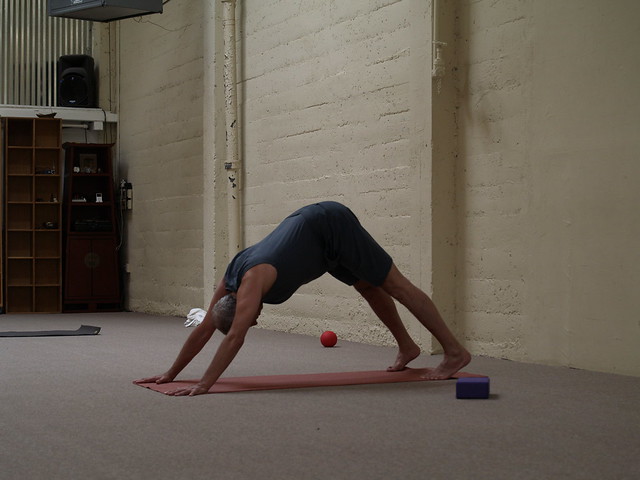
Downward Dog Pose - Adho Mukha Svanasana

 
Downward Dog Pose - Adho Mukha Svanasana is a Intermediate inverted arm support yoga pose. 


Downward dog yoga pose, or Adho Mukha Svanasana in Sanskrit, is a classic yoga pose that offers many benefits. Here are a few:

  1. Stretches the entire body: The downward dog pose stretches the entire body, including the arms, legs, back, and shoulders. This can help improve flexibility and range of motion, and can also help relieve tension and tightness in the muscles.

  2. Strengthens the upper body: The downward dog pose requires the arms and shoulders to support the weight of the body, which can help improve upper body strength. This can be especially beneficial for activities that require upper body strength, such as lifting, carrying, and pushing.

  3. Improves digestion: The downward dog pose can help improve digestion by gently massaging the digestive organs and promoting the flow of blood and oxygen to the abdomen. This can help alleviate bloating, constipation, and other digestive issues.

  4. Boosts energy: The downward dog pose can help boost energy levels by increasing blood flow to the head and brain. This can help improve focus and concentration, and can also help reduce fatigue and increase vitality.

  5. Relieves stress and anxiety: The downward dog pose can help calm the mind and relieve stress and anxiety. The inverted position can help calm the nervous system and promote a sense of relaxation and well-being.

Larry in a downward dog
Featured in most yoga classes Down dog pose (adho mukha svanasana) strengthens and stretches most of the body.
 The pose is know to relive stress and ignite the body.

The Beautiful Chaos of Dog Yoga: Bringing "Downward Dog Days" to Life

Sometimes, the best creative ideas come from taking a familiar, often serene concept and injecting a healthy dose of reality (or, in this c...